











































Imran Khan secures bail from Supreme Court in eight May 9 cases
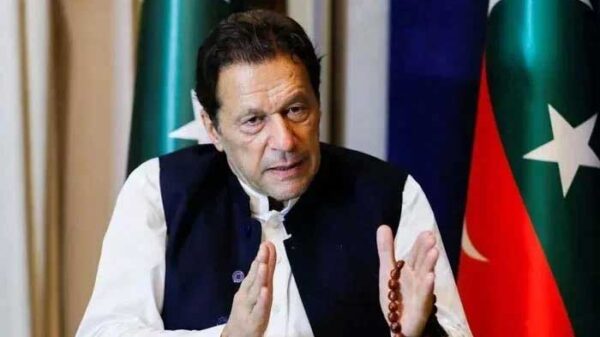
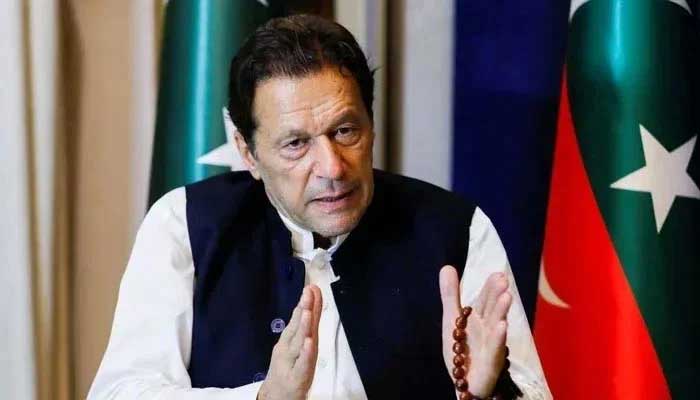
The Supreme Court on Thursday approved bail for former prime minister Imran Khan in eight cases linked to the May 9, 2023 riots.
The riots broke out after Imran’s arrest on May 9, when PTI supporters launched violent demonstrations across the country, targeting military facilities, government buildings, and even the Lahore corps commander’s residence. Thousands of party workers and leaders were arrested in the aftermath.
In November 2024, an anti-terrorism court in Lahore had rejected Imran’s bail pleas in cases stemming from the riots, including the attack on the corps commander’s house. That decision was upheld by the Lahore High Court (LHC) on June 24. Imran later appealed to the Supreme Court against the LHC ruling.
On Thursday, a three-member bench headed by Chief Justice Yahya Afridi, along with Justices Muhammad Shafi Siddiqui and Hasan Azhar Rizvi, heard arguments from both sides. Barrister Salman Safdar represented Imran, while Punjab’s special prosecutor Zulfiqar Naqvi appeared for the state. After concluding arguments, the CJP announced the court’s verdict in Imran’s favor.
Despite this relief, Imran still faces numerous other cases. Behind bars since August 2023 in the £190 million corruption case involving state gifts, the PTI founder remains incarcerated at Adiala Jail while other trials related to the May 9 riots continue.
The PTI celebrated the ruling, declaring it a “Victory For Imran Khan” in a post on X.
#VictoryForImranKhan – Supreme Court granted bail to Imran Khan for May 9th cases. #May9th_FalseFlag operation proven!
— PTI (@PTIofficial) August 21, 2025
Meanwhile, Information Minister Attaullah Tarar played down the development and said it was “sad” to see the party celebrating bail when Imran was already convicted. He added that bail was given to murderers, robbers and every criminal, saying that it did not mean acquittal and the case trial was still left.
“The trial process is underway. The May 9 case is the entire nation’s case … so much celebration on getting bail is beyond understanding. Does receiving bail mean burial or acquittal? The answer is no.”
The Hearing
At the beginning of the proceedings, Punjab prosecutor Zulfiqar Naqvi explained that he had been unable to appear the previous day due to illness.
Chief Justice Yahya Afridi then posed two questions to him. First, he asked whether the Lahore High Court’s (LHC) observations in a bail matter could be considered final. He noted that during the August 12 hearing, the Supreme Court (SC) had deliberately avoided commenting on certain LHC findings to prevent affecting the case of either side.
The second question from the CJP was whether the principle of precedent applied, since the same high court had earlier granted bail to a suspect accused of conspiracy.
In response, Naqvi argued that court observations in bail cases are always “interim” in nature and carry no influence on the trial. After a short recess, he requested permission to argue on the merits of the case. However, CJP Afridi restricted him to answering only legal questions regarding the conspiracy charge.
The CJP pressed further, asking Naqvi to cite any instance where the SC had denied bail in conspiracy cases. He reminded him that the top court had recently granted bail in two similar matters and urged him to demonstrate how this case was different.
Naqvi referred to evidence of conspiracy allegedly available on social media, but the CJP cautioned him not to go into merits at the bail stage. He further directed the prosecutor to present decisions of past cases. After another break, Naqvi read aloud the ruling in the Ejaz Chaudhry case.
The bench questioned whether conspiracy charges had ever led to bail rejection in recent SC cases, with CJP Afridi stressing that bail had been granted in all similar matters. Justice Shafi Siddiqui highlighted that Chaudhry had been accused of presence and conspiracy at the scene, while Justice Hasan Rizvi pressed the prosecutor on whether Chaudhry was actually present on May 9—receiving no clear response. “You are the prosecutor and you don’t know the basic fact,” Justice Rizvi remarked.
The bench also inquired what evidence existed against Imran Khan. Naqvi cited statements from three witnesses, insisting the PTI founder played a central role. However, CJP Afridi warned that discussing merits would open the door for Imran’s counsel, Barrister Salman Safdar, to do the same, potentially influencing the trial.
When asked about the FIR, Naqvi replied that Imran was named in three out of ten cases, with the FIR registered on May 9. He added that police had sought permission for voice matching, photogrammetric, and polygraph tests, but despite approval, these tests could not be conducted. “If so, there will be legal consequences,” the CJP noted.
Justice Rizvi questioned whether such tests were normally performed in other cases, while Naqvi maintained that the law barred Imran’s bail due to strong evidence. The CJP countered that the trial court would ultimately decide on the evidence.
The bench also observed that Imran had remained on bail for two months after the incident before being arrested, asking if that period had not been sufficient for the police to complete their investigation.
After hearing arguments from both Naqvi and Safdar, the Supreme Court approved Imran Khan’s bail applications in eight cases.